
NV Casino’s platform Problem Gambling Help Resources in Denmark
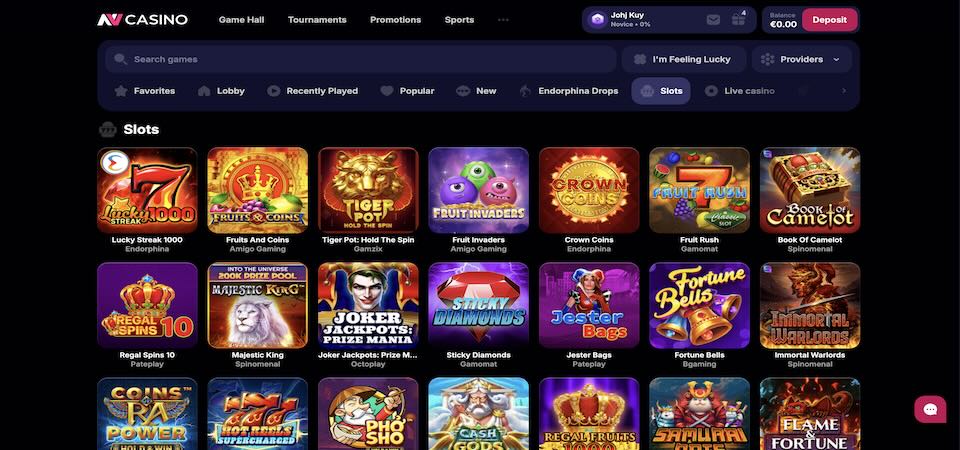
At the casino, the dedication to player safety extends well beyond entertainment https://nv-casino-dk.dk/responsible-gambling/. A comprehensive, evidence-based approach to harm reduction is central to the operation, guided by the idea that wagering must remain a free-choice leisure activity and never a source of personal difficulty. The team continuously refines its responsible gambling system so that every registered user in Denmark has access to effective, transparent tools designed to interrupt problematic patterns before they develop. This resource gathers the most important support systems, from mandatory deposit limits and reality checks to immediate routes into Danish professional treatment networks. No degree of commercial interest overrides the duty to protect vulnerable individuals, and every feature described on this page is built to that ethical standard.
Understanding Problem Gambling Dynamics in a Danish Context
Problem gambling does not announce itself with a singular dramatic incident; it unfolds through nuanced alterations in conduct that can persist for many months before a individual or their relatives become aware of the cost. Within Denmark, investigations published by the state health agencies highlights a combination of cognitive distortions, affective dysregulation, and environmental triggers such as aggressive marketing or unsupervised digital access as the primary drivers of harmful play. At NV Casino, the internal damage-reduction system treats the condition as a health-related matter rather than a moral failing. This approach aligns with the Danish Health Authority’s stress on early intervention within regulated gaming environments. By acknowledging the psychological underpinnings of loss-chasing, players are better equipped to employ the system protections embedded within the platform before medical assistance becomes necessary.
The Denmark’s licensing system, supported by Spillemyndigheden, requires all licensed operators to include required gaming safety measures, yet NV Casino builds upon these basic norms through behavioral data analysis and responsive alerts. When a payment trend accelerates rapidly or a gaming duration exceeds a predefined threshold, the system triggers an in-session notification that stimulates consideration without interrupting gameplay forcefully. This nudge-based methodology is informed by behavioural economics research indicating that well-timed interruptions reduce rash actions. Recognizing these patterns helps players recognise that the platform itself functions as an proactive watchful system, not a neutral system operator. Merging legal adherence with preventive oversight creates a safety net that operates quietly in the behind the scenes of every profile.
Detecting Early Warning Indicators and Behavioural Markers
Recognising a developing problem necessitates vigilance of distinct behavioural signals that often come before a clinical diagnosis. At NV Casino, the educational content delivered to players emphasises indicators taken from the DSM-5 criteria for gambling disorder and adapted for a self-assessment context. Common early markers include an increasing preoccupation with recouping losses, misleading to family members about the time or money spent on gambling, borrowing funds specifically to continue wagering, and suffering from irritability or restlessness when attempting to reduce play frequency. These signs do not confirm a disorder by themselves, but the presence of multiple markers over a extended period suggests that protective tools should be triggered immediately, even before looking for external help.
The platform’s responsible gambling interface offers a brief, anonymous self-assessment questionnaire that returns a risk profile without recording or sharing responses. Questions cover loss-chasing frequency, emotional states during and after sessions, and the apparent impact on daily responsibilities. Results are displayed with plain, non-judgmental language that guides low-risk users toward maintenance tools and elevated-risk users toward self-exclusion or external support options. This triage approach respects user autonomy while providing actionable feedback rooted in clinical research. NV Casino also instructs its customer support staff to identify linguistic cues in chat or email interactions—such as indications of financial desperation or requests to bypass limit systems—and to reply with scripted empathy statements that steer the individual toward help resources without escalating distress or encouraging continued play.
ROFUS Integration and the National Self-Exclusion Register
Denmark runs a centralized self-exclusion system called ROFUS (Register Over Frivilligt Udelukkede Spillere), operated by Spillemyndigheden, and NV Casino fully incorporates this national database. When a player signs up for ROFUS, on a short-term or permanent basis, that exclusion automatically applies to every licensed gambling operator in Denmark, encompassing land-based venues. This cross-platform protection resolves a critical weakness of operator-specific exclusions, where a determined individual might simply migrate to a different website. NV Casino’s real-time API connection to the ROFUS database assures that excluded players are intercepted at the point of login, not at the point of deposit, creating an airtight barrier that functions before any financial commitment takes place.
Registration with ROFUS is a straightforward process conducted through the official Spillemyndigheden portal using NemID or MitID for secure authentication. The system allows users to select a temporary exclusion lasting one, three, or six months or to choose a permanent registration that stays in effect unless a specific request for removal is submitted after the minimum statutory period expires. NV Casino clearly shows ROFUS information at multiple touchpoints, including the footer, the registration flow, and inside the responsible gambling dashboard, so that players come across the national option as a natural complement to the platform’s internal tools. Employees who interact with customers also receive training on how to lead individuals toward ROFUS without overstepping into clinical advice, maintaining the appropriate boundary between technological assistance and professional counselling that remains outside the scope of an operator’s role.
Third-party Danish Problem Gambling Support Organisations
Professional care for gambling addiction in Denmark is available through a network of publicly funded and non-profit services that function independently of the gaming industry. The most recognised resource is StopSpillet, a national helpline and online counselling service launched by Spillemyndigheden in partnership with the Danish Health Authority. StopSpillet offers free, confidential telephone and chat-based support for both individuals dealing with gambling problems and their affected relatives. Trained counsellors provide motivational interviewing, brief interventions, and referrals to specialised treatment centres positioned across the country’s five regions. The service keeps no connection to any operator, ensuring that conversations remain entirely impartial and concentrated on the caller’s wellbeing.
The Centre for Ludomani, a specialised treatment unit working under the regional psychiatric services, offers cognitive-behavioural therapy and family-focused interventions rooted in decades of clinical experience with behavioural addictions. Referral pathways typically run through a general practitioner, though direct contact is also possible in many municipalities. Additionally, the Danish Gambling Addiction Association (Landsforeningen for Ludomani) runs peer-support groups based on a fellowship structure, providing long-term community reinforcement for individuals working towards abstinence or controlled gambling goals. NV Casino maintains an up-to-date directory of these services, including telephone numbers and operating hours, displayed directly within the platform’s responsible gambling section. No referral fees or commercial arrangements are found between the operator and any treatment provider, preserving the structural independence that underpins public trust in the Danish harm-reduction ecosystem.
Reality Checks and Session Time Management Tools
Time distortion ranks among the most typical characteristics of addictive gambling, where users lose track of how much time has passed since logging in. NV Casino fights this problem with required reality-check notifications that show up at fully adjustable periods, defaulting at 60 minutes unless the user picks a shorter duration. Each pop-up presents a clear summary of session duration, total spending, and the current time, and demands an active confirmation before the game continues. The system purposely avoids dismissible banner messages that players learn to ignore, instead using a modal overlay that fully pauses gameplay. This forced break interrupts the tunnel effect that can fuel long sessions and offers higher cognitive functions a limited chance to assess whether continued play aligns with the original recreational intention.
In addition to the reality-check function, the site provides a strict session time restriction that immediately ends their session once the set time runs out. When a player sets a two-hour session limit, for instance, the system displays a ten-minute notice leading to a non-negotiable logout that cannot be ignored until the next calendar day. These caps are adjustable, but any change made mid-play triggers the same break period applied to deposit limit increases. NV Casino also provides an on-screen session timer that stays visible across all game pages, functioning as an ongoing visual cue. Investigations on digital habit development shows that ongoing environmental cues of elapsed time can cut the compulsion cycle, especially for players who struggle with self-monitoring while deeply engaged in rapid-repetition game formats such as slots or live table options.
Mandatory Deposit Limits as a Core Protection
Danish gambling legislation mandates that every licensed operator impose strict deposit limits, and NV Casino treats this requirement as the first structural barrier against financial harm. Upon registration, each player must set a personal daily, weekly, or monthly deposit threshold before any wagering can start. The interface does not permit users to circumvent this step, and the chosen limit is valid universally across all game categories. Requests to increase a cap are submitted to a mandatory cooling-off period, preventing the possibility of impulsive upward adjustments during an emotionally charged session. This time delay permits the brain’s executive control systems to reactivate, reducing the likelihood that a temporary urge to chase losses overrides the long-term budget plan a player previously created.
Decreasing a deposit limit takes effect immediately, while any requested increase needs a full 24-hour reflection window before activation. This asymmetric design mirrors a core principle in consumer protection: making it easier to tighten restrictions than to relax them. NV Casino also adds additional voluntary sub-limits on top of the mandatory ceiling, allowing players to set separate per-game or per-session caps that provide granular control over spending velocity. Data from internal customer behaviour reviews indicates that users who establish multiple sub-limits display more stable session lengths and lower post-session regret scores. The deposit limit framework is not introduced as a punitive measure but as a budgeting feature that supports recreational spending within predetermined boundaries that the individual, not the operator, specifies.
Protecting Minors and Blocking Underage Access
Danish law forbids all forms of betting by people under the age of 18, and NV Casino uses a multi-layered verification system that goes beyond basic age-declaration checkboxes. The registration process demands a valid Danish personal identification number, which the system cross-references against the central civil registry to verify the applicant’s date of birth in real time. Accounts that fail this verification step are barred automatically before any deposit or gameplay function becomes available. Furthermore, NV Casino continuously monitors for behavioural patterns that might suggest shared-device access by minors, such as dramatically altered session timings that correspond with school holiday schedules. While no technological system can guarantee perfect blocking of underage users, the layered approach merges identity validation, payment method age restrictions, and parental awareness resources to establish a robust deterrent.
Parental controls serve as an additional layer of safeguarding for households where adults and minors share devices. NV Casino supplies clear, step-by-step instructions for enabling operating-system-level restrictions and installing accredited third-party filtering applications such as NetNanny or Gamban, which restrict access to gambling websites at the device level. These tools deliver security independent of the platform’s internal controls, operating across all installed browsers and applications. The operator also encourages account holders to activate biometric or PIN-based login requirements on their personal devices so that a child cannot access a logged-in session left unattended. By uniting rigorous identity verification, ongoing monitoring, and educational guidance on external parental controls, NV Casino addresses the issue of underage access through a comprehensive strategy that accepts the shared responsibility between operator, account holder, and household.
The Self-Exclusion Protocol at NV Casino
Personal ban constitutes the most robust personal safeguard present in the casino, establishing a contractual restriction that stops account login for a defined duration. Within NV Casino, players are able to activate exclusion straight from the responsible gambling dashboard, picking between periods of 24 hours, seven days, one month, six months, or a lifetime exclusion that requires a detailed reactivation procedure with identity checks and a formal review. Once activated, any advertising outreach cease instantly, and every effort to log in returns a non-encouraging message that does not incentivise return. Additionally, the system blocks the setup of fake accounts by cross-referencing identifying details, an compliance tool that operates behind the scenes if ever a user tries to sign up again with a alternate email or payment method.
The system applies its protective reach to funds stored in the account upon the start of exclusion. Any remaining balance is transferred to the registered payment method in the usual turnaround time, eliminating any incentive to “play out” residual funds. During the exclusion period, the responsible gambling team carries out regular audits to verify that no promotional entity inadvertently communicates with the excluded individual. For those selecting a permanent exclusion, NV Casino maintains the block permanently and demands a signed declaration and a reflection time of a minimum of seven days before any reactivation request is even reviewed. This purposeful delay guarantees that the choice to gamble again is made in a calm, considered state as opposed to during a moment of craving or outside influence. The self-exclusion mechanism acts as the ultimate safety valve as part of the wider player protection system.
Creating a Sustainable Own Gambling Management Plan
Long-term balanced play relies on shifting from responsive harm control to preventive habit development, and NV Casino urges every user to construct a personal gambling management plan that reaches beyond the platform’s built-in tools. Such a plan commonly starts with a clear monthly entertainment allowance that is purposefully divided from vital household outgoings, plus a pre-commitment to stop for the day once that limit is depleted irrespective of winning or losing outcomes. Recording these decisions—whether in a online note, a worksheet, or a mutual family agreement—substantially increases follow-through, as documented in implementation-intention research from health psychology. The plan should also set certain days or times of the week for gambling play, stopping the gradual spread of sessions into formerly safeguarded time periods.
The management plan gains extra strength when it involves a dependable accountability companion who is granted authorization to pose direct questions about observance without provoking defensiveness. For many players, a husband/wife, close friend, or relative fulfills this purpose, and NV Casino’s account-sharing transparency features permit the user to export activity summaries that aid open conversations. Periodic self-review of deposit and session-time information, carried out on a fixed timeline such as the first Sunday of each month, enables early identification of trends that might escape attention during daily life. The platform also supports a optional “cool-off” mode running up to 30 days, which maintains the account active but blocks deposits and play, establishing a structured hiatus for thought without the definitiveness of self-exclusion. When these individual strategies combine with the required limits, reality checks, and external support channels described throughout this resource, the ensuing safety system delivers numerous, interconnected levels of security that respond to changing life circumstances.
